Flotsam in Situ — Weskus/West Coast Beaches, South Africa.
Flotsam is the polite word for it. Most of what washes up on the West Coast beaches around St Helena Bay is fishing gear, nets, rope, wire, tyres and plastic, tangled together after spending months or years tumbling around in the ocean.
Some of these bundles are surprisingly large and dense. A lost net doesn't stay a net for long. It collects rope, bottles, wire, the occasional tyre, bits of boat. By the time it beaches itself, it can weigh significantly more than when it left the harbour.
The environmental impact is well documented. Ghost nets, as they are known, continue to fish long after they are lost, trapping seabirds, fish, and marine mammals. What eventually lands on the beach is the lucky outcome, in a sense.
Photographically, this detritus is hard to ignore. The textures, the layers, the rust and rot and colour. These images were shot in situ, exactly as found, nothing moved or arranged. The beach and sea did all the work.
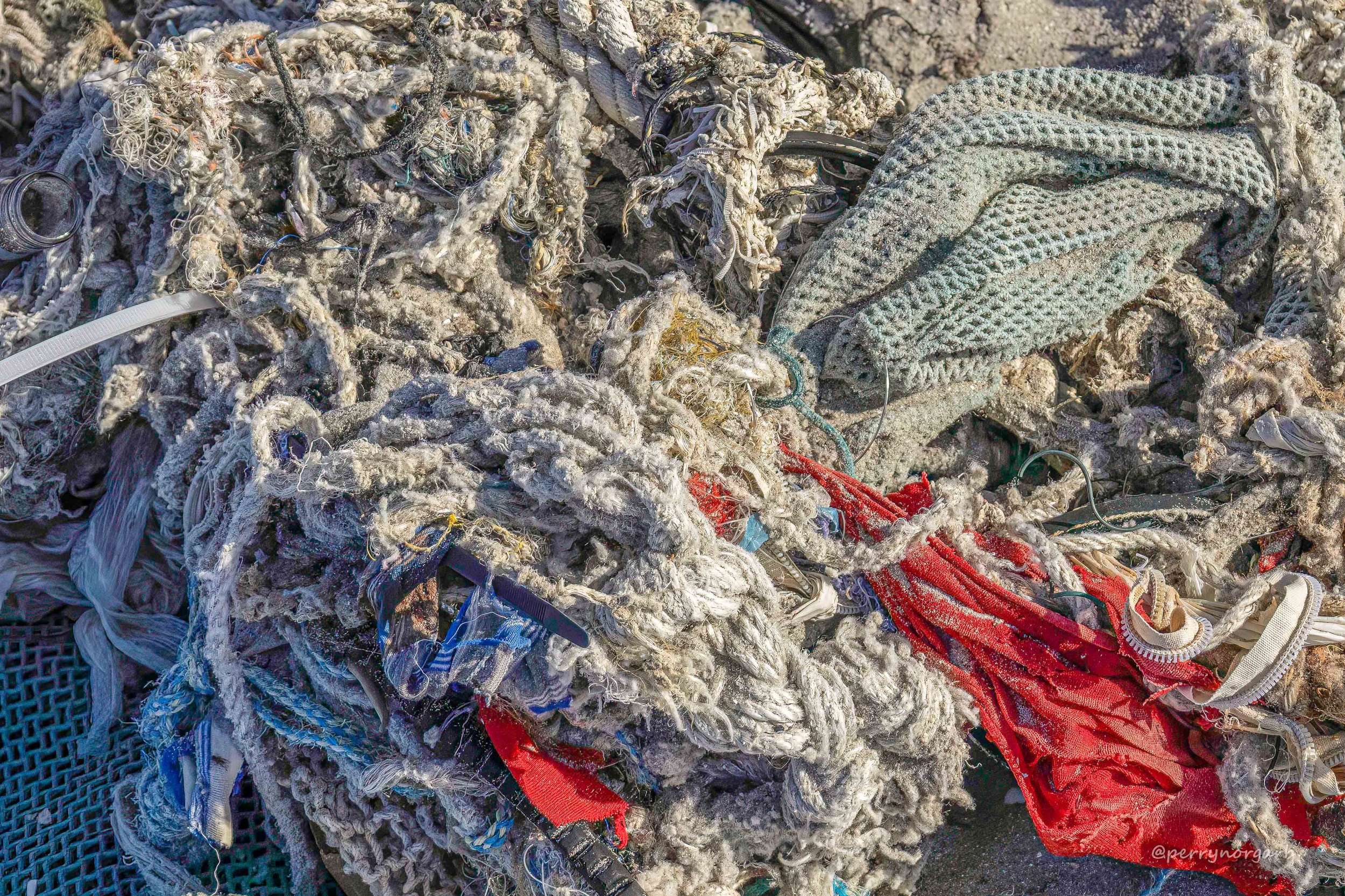
Tangled flotsam and fishing debris washed up on a West Coast beach, South Africa.

Old tyre and fishing net flotsam on beach, West Coast South Africa, black and white.

Beach litter, West Coast, South Africa, black and white.

Rusted metal debris on the beach, West Coast, South Africa.

A tangled fishing net and rope washed ashore on Weskus beach.

Wire abstract, West Coast beach, black and white.

Minimalist abstract of old oil drum sunken into the beach, West Coast South Africa.


Abstract close-up of beach litter and flotsam.

Minimalist fishing net flotsam on beach, West Coast, South Africa.

Abstract of fishing rubbish, combined with sea shells, washed on a Weskus beach.

Wire and bedspring flotsam on West Coast beach, abstract minimalist.

Black and white wire flotsam, West Coast, South Africa.

Old tyres dumped on the beach, St Helena Bay. I made a blog post about tyre pollution here.